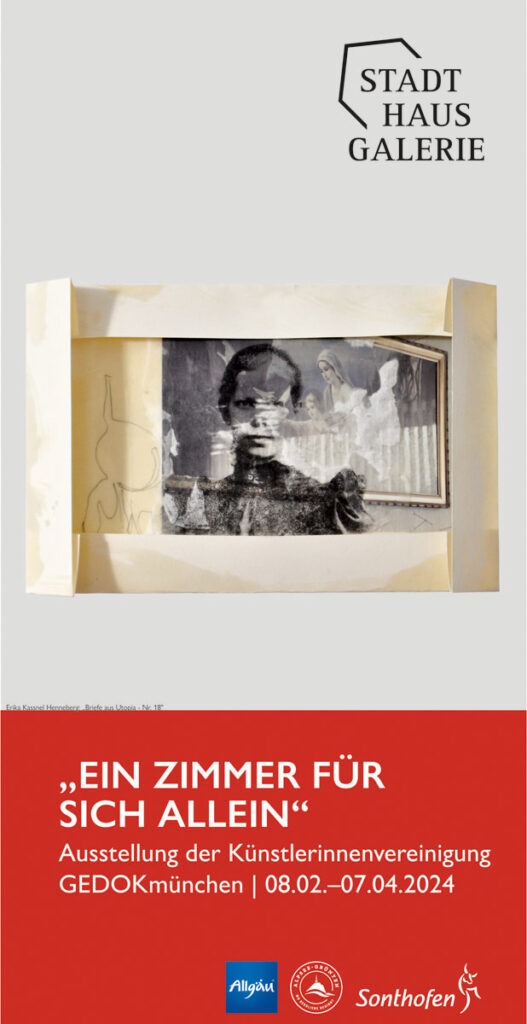
A Room to Yourself

Exhibition of the GEDOK in the Stadthausgalerie Sonthofen

StartVirginia Woolf

8.02. until 7.04.2024

Vernissage 7.02.2024, 6.30 pm

Stadthausgalerie, Marktstr. 12, 87527 Sonthofen

At Stadthausgalerie Sonthofen, ten artistic positions from the GEDOK come together in the exhibition A ROOM OF ONE’S OWN. Erika Kassnel-Henneberg presents a selection of her video works that explore memory, loss, and identity. These works speak quietly, yet with urgency. They invite viewers to reconsider their relationship to images, archives, and personal history.

How would I describe my Room?

“When a person leaves for good, she or he leaves many things behind. What happens to them? Are they kept? Are they given away? Sold? Thrown away? And what about those that can’t simply be disposed of, such as a room – his or her room. We had a room like that in my childhood home. A shrine of memories.

Spatial Dimension of Remembering

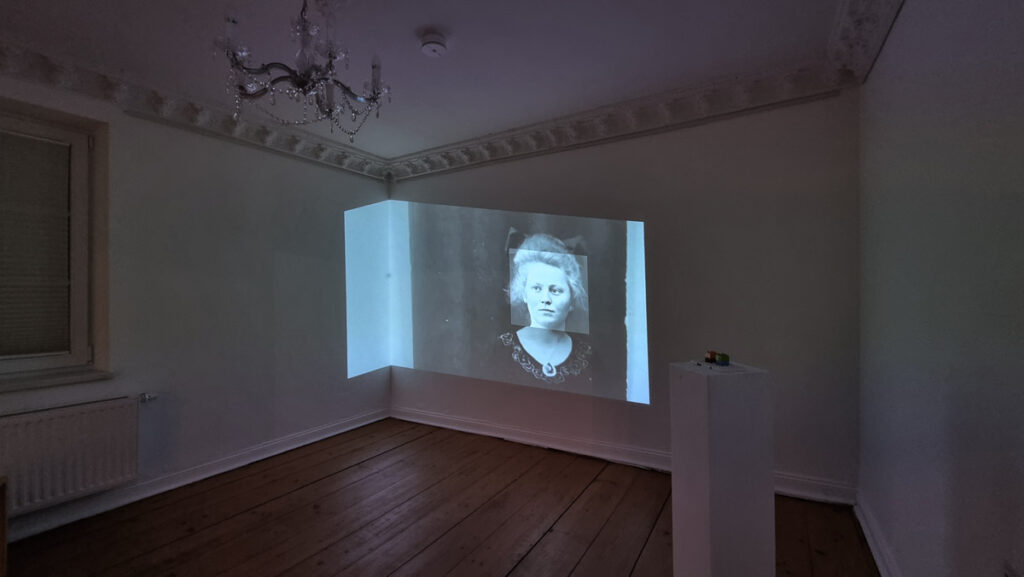
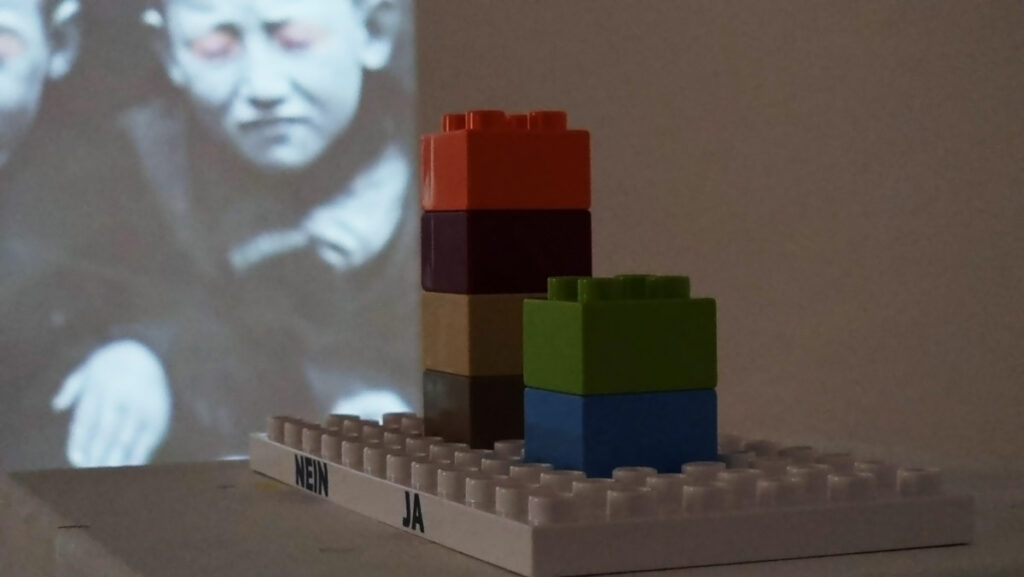
These rooms here describe the spatial dimension of remembering: old photographs are brought to life – Deep Paula and Post Mortem – an artificial, uncanny liveliness. Would you be willing to bring a photo of a deceased loved one to life – with the help of artificial intelligence?

What meaning does an old photo album have Below the Surface when there is no one left to tell the stories of these people? Can our imagination save them?

The Letters as Metaphorical Bridges

And then there are countless Letters from Utopia. Who still writes letters today? Here they are metaphorical bridges to a place of longing that only exists in our memories – a very personal Utopia. Science has taught us that memory is flawed. We leave traces, collect documents and photographs, and archive them. I see this as an existential doubt: who am I if I can’t trust memory? If I leave no traces, did I ever exist?” from the description of my room.

About the Exhibition

“In the exhibition “A room to yourself”, ten artists are showing works that deal with Virginia Woolf’s thoughts on feminism and gender differentiation in the broadest sense. The title refers to Woolf’s 1929 essay, which has been available as a German translation since 1978. The themes it contains, such as autonomy, self-development and creative freedom through various artistic disciplines, are still relevant today. A space, be it physical or metaphorical, functions as a home for the innermost thoughts and dreams. It offers the necessary freedom to unfold the inner monologue, to spin ideas and to connect them with creative impulses. The participating artists are members of GEDOKmünchen, an interdisciplinary association of women artists that has been active nationwide since 1926.”

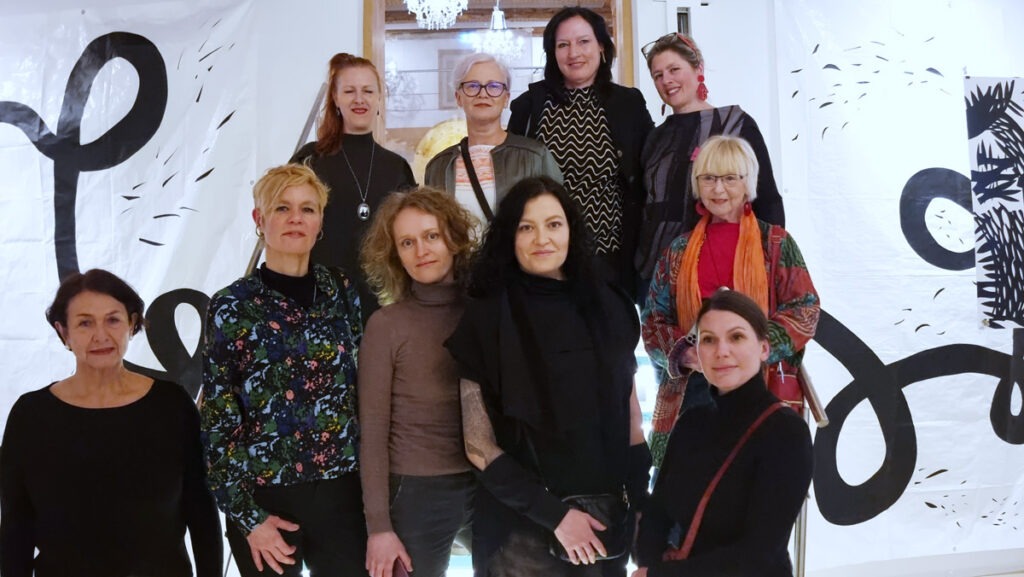
Artists: Silke Bachmann, Renate Gehrcke, Erika Kassnel-Henneberg, Katharina Lehmann, Ina Loitzl, Herta Miessner, Christiane Pott, Martina Salzberg, Julia Smirnova, Olga Wiedenhöft

Curated by Uta Römer

Music: Anna Heller
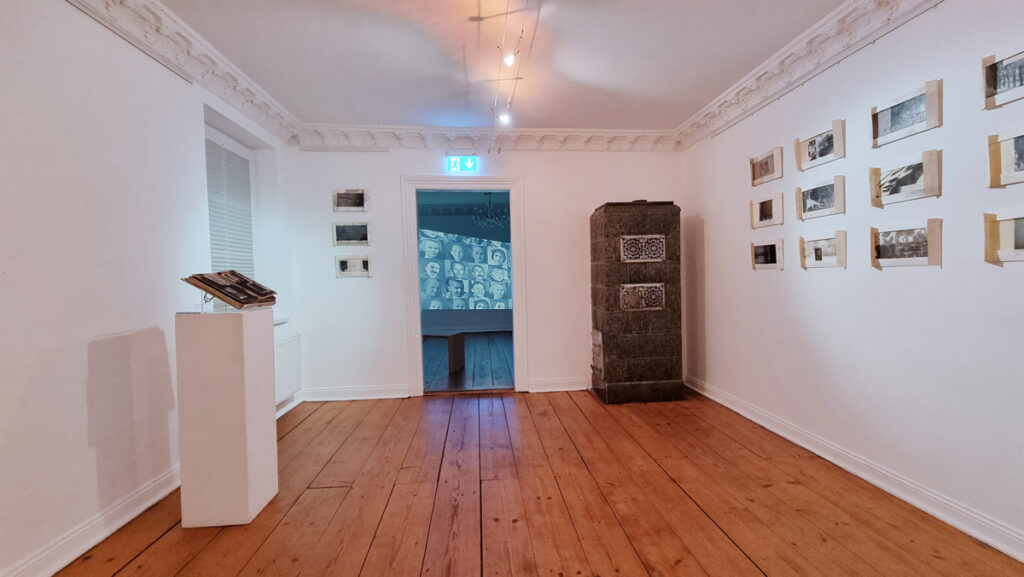
Letters from Utopia

https://www.stadthausgalerie.de/ausstellungen-veranstaltungen/ausstellung-ein-zimmer-fuer-sich-allein-der-gedokmuenchen/

https://gedok-muc.de

Memory Needs Space

When a person leaves forever, many things remain. Furniture, photographs, letters. Some objects can be passed on. Others carry a weight that resists disposal. A room belongs to this category. It preserves traces of a life. Many homes contain such a room. It functions like a shrine of memory.

The exhibition builds on this idea. The room stands for the spatial dimension of remembering. It stores stories, even when no one remains to tell them. Space becomes a bearer of identity. It holds on to what threatens to disappear.


Video Works Between Past and Present

Erika Kassnel-Henneberg’s video works focus on this fragile in-between state. Old photographs begin to move. In Deep Paula and Post Mortem, an artificial, almost unsettling liveliness emerges. The artist uses digital processes to animate static images. The result feels familiar and alien at the same time.

A central question remains unresolved: Would we bring a photograph of a beloved deceased person back to life? Technology makes it possible. Art demands a response. Kassnel-Henneberg offers no answers. She opens a space for reflection.


Artificial Intelligence and Emotional Proximity

Artificial intelligence promises closeness. It reconstructs faces, simulates expressions and gestures. Yet closeness never replaces lived relationships. The videos expose this tension. They show how easily technology reshapes memory.

At the same time, a new form of intimacy appears. The animated image confronts the viewer directly. It demands attention and engagement. The audience does not observe from a distance. It becomes part of the encounter.


Photo Albums as Fragile Archives

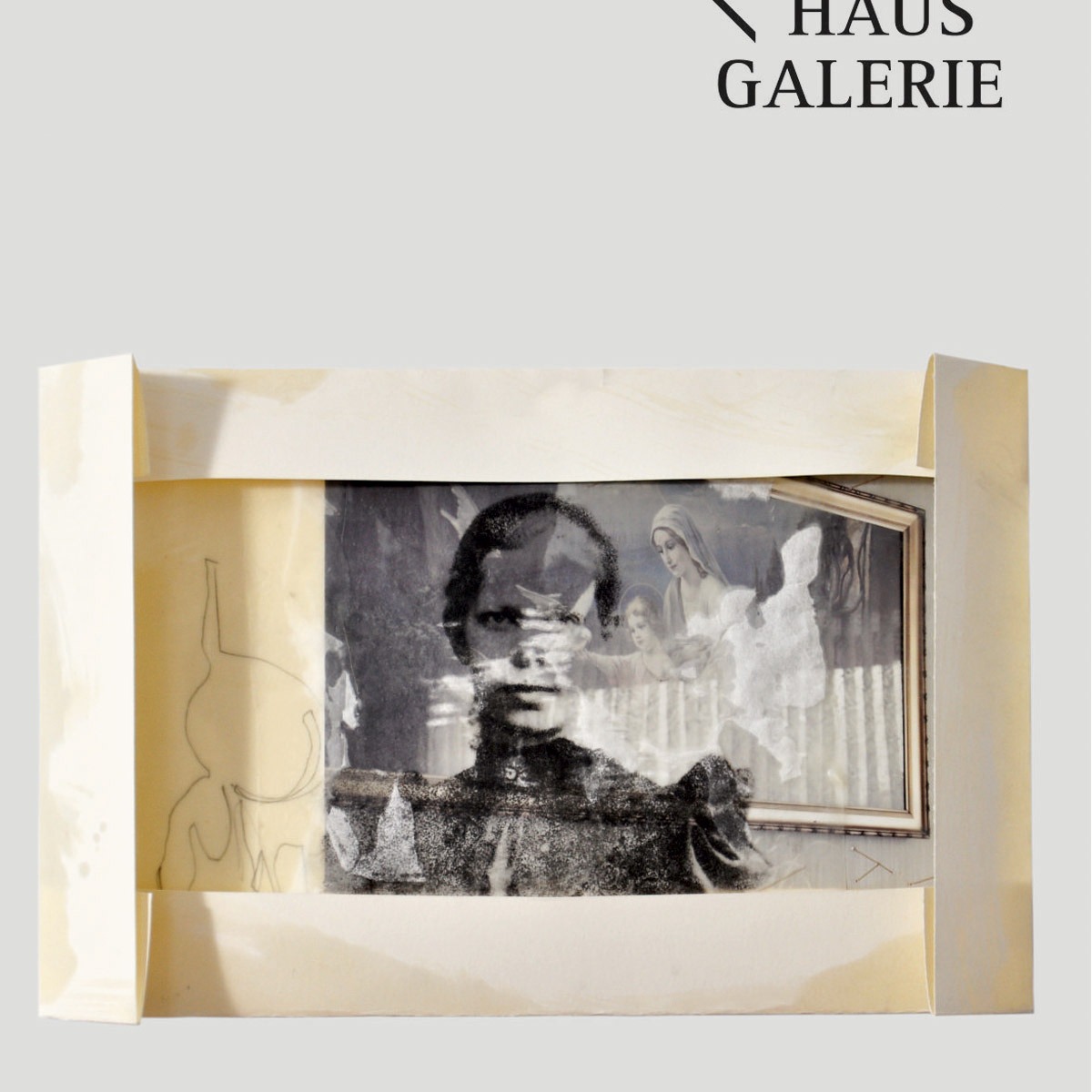
What does an old photo album mean when no one remains to tell the stories behind it? The work Under the Surface addresses this question directly. Images lose their context. They remain as empty shells.

Can imagination fill this gap? Or does it invent new biographies? Kassnel-Henneberg treats the album as an archive without a narrator. The work reveals how memory disintegrates when it is no longer shared.


Letters from Utopia: Longing and Loss

Another motif runs through the exhibition: letters. Letters from Utopia resemble messages from another era. Today, hardly anyone writes letters. Here, they function as metaphorical bridges to a place of longing that exists only in memory.

Utopia stands for the deeply personal. It marks a place that survives only internally. The letters connect past and present. They create closeness, even though sender and recipient have long since vanished.


Doubt About One’s Own Memory

Science teaches us that memory is unreliable. We forget. We distort. We reconstruct. That knowledge drives us to collect traces. We archive documents, photographs, and texts.

These actions reveal an existential doubt. Who am I if I cannot trust my memory? Did I ever exist if I leave no traces behind? The exhibition raises these questions without dramatization. It leaves the answers to the viewer.


GEDOK Positions in Dialogue

The exhibition brings together ten artists from GEDOK Munich. Their works engage, in a broad sense, with ideas developed by Virginia Woolf. The title refers to her essay A Room of One’s Own.

Themes such as autonomy, self-realization, and creative freedom remain highly relevant. The exhibition translates these ideas into contemporary artistic languages.


Space as a Condition for Creativity

A space can be physical or metaphorical. It offers protection. It enables concentration. It allows thoughts to grow. In the exhibition, space functions as a home for inner monologue and imagination.